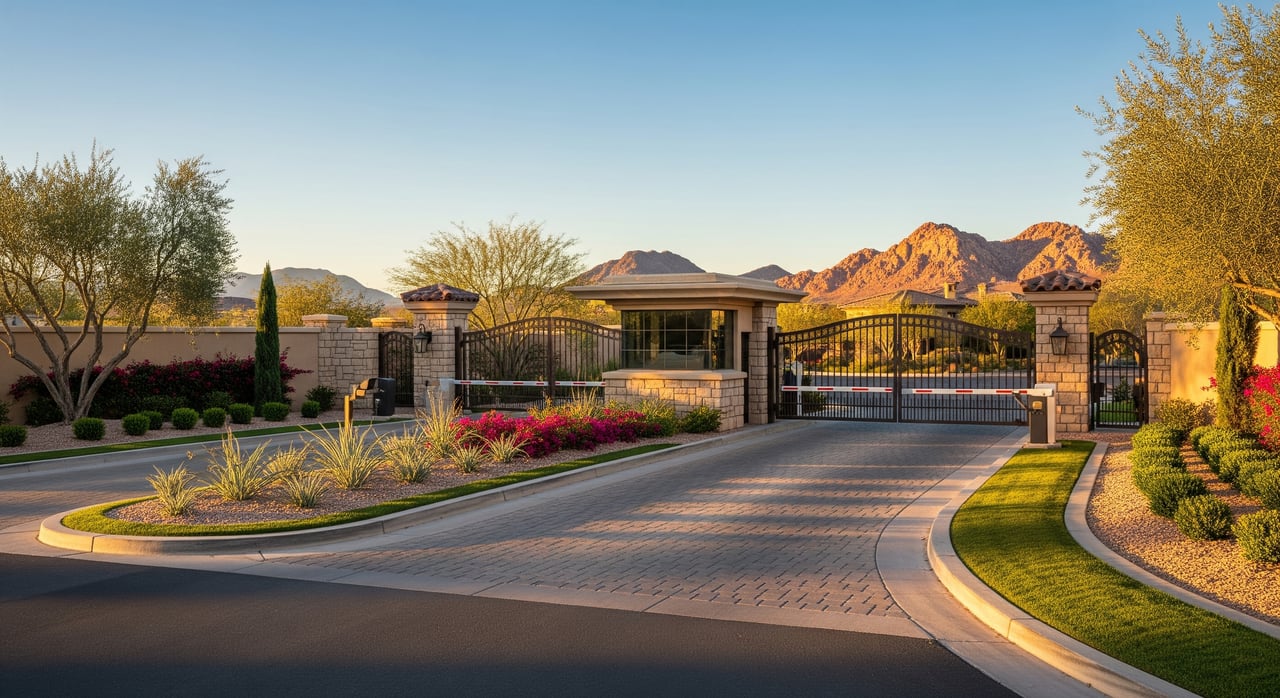
Thinking about a guard-gated home in Summerlin? You are likely weighing privacy, convenience, and how daily life changes when every guest, vendor, and delivery passes through a gate. It is a refined lifestyle, but it runs on rules, protocols, and shared costs that vary by neighborhood. In this guide, you will learn how guard-gated communities in Summerlin operate, what amenities and assessments typically cover, how CC&Rs and design review affect your plans, and what to check before you write an offer. Let’s dive in.
What guard-gated means
Guard-gated neighborhoods in Summerlin are private enclaves within the larger master-planned community developed by The Howard Hughes Corporation. These areas use staffed gates, electronic controls, or both to manage access. They are designed to offer privacy, controlled traffic, and a coordinated amenity experience.
In Nevada, common-interest communities follow state law under NRS Chapter 116. That framework defines how associations operate, what owners can access, and how budgets and reserves are handled. Private security manages access and patrols, while public safety remains the role of local law enforcement.
How gates work
Guard-gated neighborhoods use a mix of staffed and electronic controls. Knowing the setup helps you plan your daily routine and guest logistics.
Gate models and staffing
- Manned gates: Staffed around the clock or during set hours. Personnel verify identity, issue passes, and log visitors.
- Electronic gates: Rely on fobs, keycards, PINs, license plate readers, or video intercoms for resident entry.
- Hybrid models: Staff present during peak periods, electronic controls off-hours.
Protocols vary by HOA. Staffing levels, training, and technology are set by the association and its security vendor.
Guest and vendor access
Guest entry is usually managed in advance. You might pre-register visitors through an online portal, issue a temporary code or QR pass, or approve their arrival by phone with gate staff. Many communities keep visitor logs or issue temporary decals.
Vendors and tradespeople typically need pre-registration, ID, and proof of insurance. Most HOAs limit work hours and may restrict loud construction in evenings or on weekends. Expect sign-in and sign-out at the gate.
Deliveries and emergency access
Package procedures differ by neighborhood. Some allow carriers to your door, while others use a centralized package room, cluster boxes, or a delivery zone near the gate. Food delivery, ride-share, and taxi services may be allowed inside or directed to guest parking at the entrance.
Emergency access is a priority. Communities should maintain clear protocols and gate override systems for ambulances, fire, and law enforcement. Ask the HOA to confirm how those systems are maintained and tested.
Amenities and services
Guard-gated enclaves often pair access control with curated amenities and services. Your assessments fund this experience.
Common amenities
- Private clubhouses and fitness centers
- Resort-style pools and programmed activities
- Golf, tennis, or pickleball facilities (community-specific)
- Landscaped entries, private parks, and trail connections
- Concierge or on-site management presence
Amenities are different from one neighborhood to another. Review the HOA’s amenity schedule, rules, and operating hours before you buy.
What dues usually cover
Assessments typically support security and gate operations, common area landscaping and maintenance, private street upkeep, trash services where applicable, utilities for common elements, and insurance for shared assets. Dues also fund operations for pools, gyms, and community programs if offered.
Master and sub-HOAs
In Summerlin, you may pay dues at two levels. The master association covers community-wide infrastructure and programming. A sub-association funds neighborhood-specific services and amenities. The division of responsibility is spelled out in the CC&Rs and budgets.
HOAs can levy special assessments for large repairs or capital projects. Review the most recent budget, reserve study, financials, and meeting minutes to understand what is funded and what is planned.
Rules and design review
With a guard-gated environment comes a coordinated design standard. This protects community character but adds steps to your improvement plans.
Architectural control
Most exterior changes require approval. Common examples include windows and doors, paint, roofing, fencing, hardscape, and landscaping. Design Review Committees set submittal requirements and timelines. Approvals can take weeks or longer, so build that into your schedule.
Rentals and use restrictions
Some HOAs limit short-term rentals or cap the percentage of rentals. Minimum lease terms are common. If you plan to lease, confirm the rules and any application process before you proceed.
Solar, EV charging, and systems
State law may limit a community’s ability to prohibit solar outright, but HOAs often apply reasonable aesthetic standards. The same is true for EV charging and exterior equipment. Ask for current policies and approval timelines for energy and technology upgrades.
Public vs private streets
Many guard-gated neighborhoods have private streets. The association maintains these roads, which affects budgets and reserves. Confirm street ownership, maintenance responsibility, and any easements for utilities or emergency vehicles.
Lifestyle trade-offs
Guard-gated living changes how you move through your day in small but noticeable ways.
Daily routines
Controlled access reduces drive-through traffic and uninvited visitors. It also adds a short checkpoint to each arrival. During busy periods, the queue at a manned gate can add a few minutes.
Hosting and deliveries
Parties and service appointments require a bit more planning. Pre-register guests and vendors to limit delays. If your community uses a package room or cluster boxes, you may pick up parcels rather than receive doorstep drop-offs.
Commuting and convenience
Residents often adjust arrival times or use resident-only lanes where available. Some service providers need special approval to enter, which can affect delivery windows and moving schedules.
Resale factors
A guard-gated address can be a positive signal for many buyers, but market value is still hyper-local.
Buyer pool and comps
Gating and amenities attract a defined segment of the market. Others prefer fewer rules or lower dues. When assessing value, lean on comparables within the same community or those with similar amenities and governance. Cross-neighborhood comparisons are less reliable.
Liquidity and disclosures
Luxury gated homes can command premiums, but sale velocity may vary in shifting markets or when dues rise. Sellers must disclose HOA details, pending litigation, rental rules, and special assessments. Clear documentation supports buyer confidence and pricing.
Buyer due diligence checklist
Request these documents before you write an offer:
- Full CC&Rs, bylaws, rules and regulations, and design guidelines
- Design Review Committee submission requirements and timelines
- Most recent annual budget, reserve study, and audited financials
- Minutes from the last 12 months of HOA and master association meetings
- Any pending or recent special assessments and capital improvement plans
- Security and gate operation contracts, plus guest/vendor/delivery policies
- Emergency access procedures and gate override protocols
- Map showing public vs private streets and maintenance responsibility
- Insurance requirements for owners and association master policies
- Any active or pending HOA litigation
- Rental and occupancy rules, including short-term restrictions
Ask the HOA or management these key questions:
- What are current assessments, what do they include, and are increases planned?
- Is the gate staffed 24/7? Who is the security provider and what are their duties?
- How are packages, food deliveries, and ride-share handled day to day?
- What is the typical timeline for exterior approvals, and what projects are commonly denied?
- Are there restrictions on solar panels, EV chargers, or other green upgrades?
- Are streets private, and what percentage of reserves is funded per the latest study?
- Have there been recent security incidents, and how are trends reported to residents?
- Are any rule changes or capital projects currently under consideration?
Safety and law enforcement
Private gate staff and patrols are not a substitute for public policing. In Summerlin, local law enforcement remains responsible for public safety and emergency response. Gate protocols should ensure rapid access for first responders. Confirm how the HOA coordinates with public agencies.
How we advise buyers
Senior-level guidance makes guard-gated ownership simpler. You benefit when an advisor can read budgets and reserve studies, confirm gate policies with management, and explain how CC&Rs will affect your renovation plans or rental strategy. You also want someone who understands how master and sub-association obligations shape your total cost of ownership.
If you would like a private consultation to review HOA documents, gate operations, and neighborhood comps for guard-gated enclaves in Summerlin, connect with Sherwood Luxury.
FAQs
What is a guard-gated community in Summerlin?
- A private neighborhood within the Summerlin master plan that controls access through staffed gates, electronic systems, or both, paired with HOA rules and shared amenities.
How do guest and vendor procedures usually work?
- You typically pre-register visitors and service providers; gate staff verify identity, log entry, and apply work-hour rules and insurance requirements for contractors.
What do HOA assessments cover in guard-gated areas?
- Funding often includes security and gate operations, common-area maintenance and landscaping, private street upkeep, utilities for shared elements, insurance, and amenity operations.
Are short-term rentals allowed in these neighborhoods?
- Policies vary. Many HOAs restrict short-term rentals or set minimum lease terms, so confirm written rules and approval steps before you plan to lease.
How do gates affect deliveries and ride-share?
- Some communities allow direct drop-off at your home; others use package rooms, cluster boxes, or gate-side pickup and drop-off zones for couriers and ride-share.
What should I review before buying into a guard-gated HOA?
- Obtain CC&Rs, rules, design guidelines, budgets, reserve studies, meeting minutes, gate policies, insurance requirements, and any special assessments or planned capital projects.